ONLINE · ACROSS AUSTRALIA
InnovateX Academy
Ongoing lessons across AI, cyber security and technology, with a Fortuna One price for Premium membership.
See the Academy offerAt Fortuna One, AI kept turning up outside the sessions that had AI in the title, including discussions about acquisitions, customer communities, faster experimentation and getting the founder out of every decision. I heard a lot about new revenue, smaller teams and faster execution, and much less about the data, permissions, approvals and exception handling required once the demo is connected to a live business.
I recorded 12 sessions on my Plaud Note Pro and I am working through them from the airport while the event is still fresh. The speakers included Natalie Kucior, John Lee, Steven Bartlett, Shelly Sullivan, Kelly Iversen, Aaron Sansoni and Tony Robbins. Below I cover AI in purchase orders, quote preparation, meeting records, customer feedback, SharePoint and CRM access, along with the systems that let a business operate without every decision returning to the founder. I also explain how I used Plaud, ChatGPT and Codex to turn two days of recordings into the page you are reading.
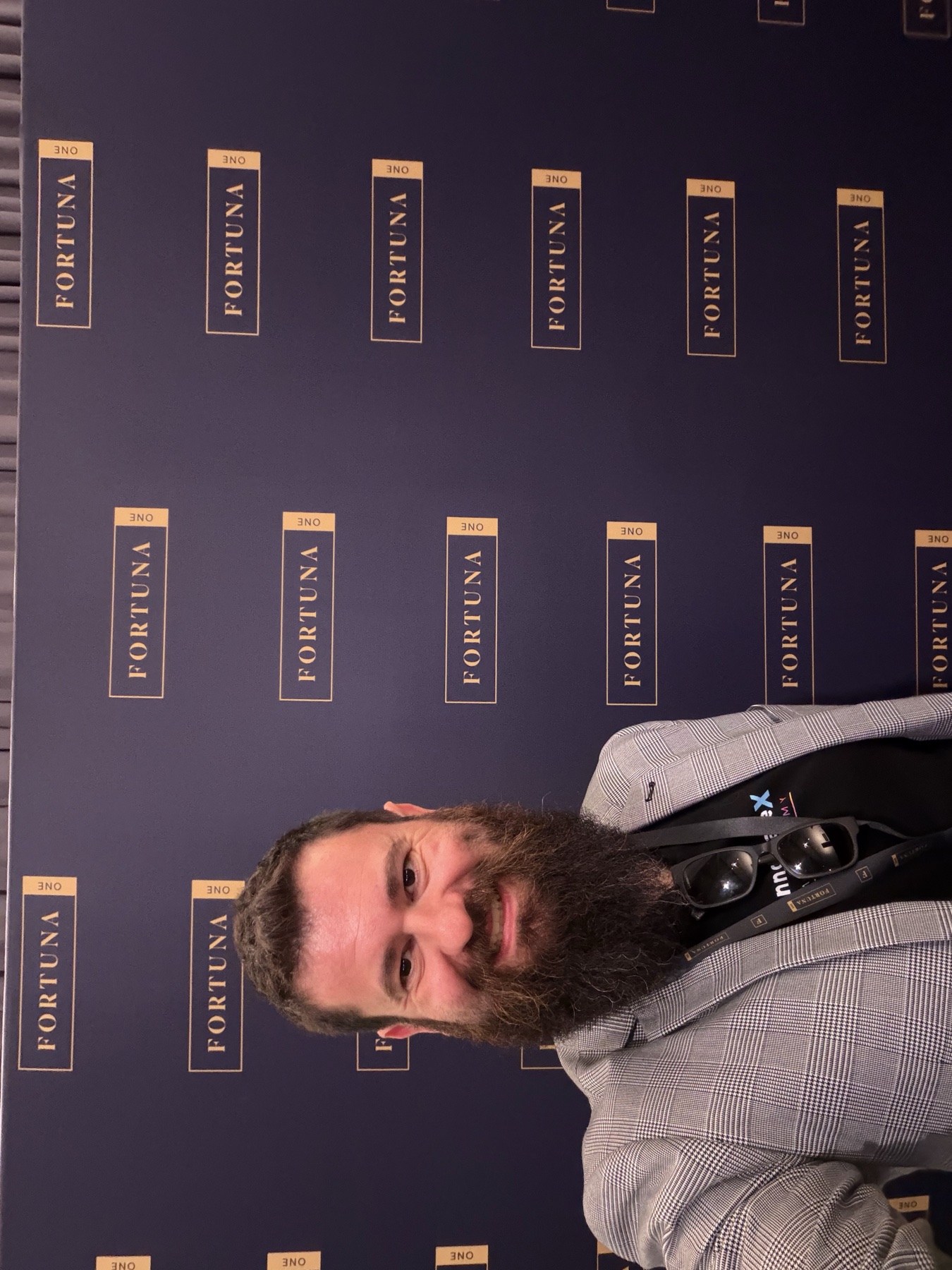
Natalie’s interview sat closest to how I already work, and I agreed with her on all fronts. She told business owners to start with the bottleneck instead of choosing ChatGPT, Claude or Gemini first, build AI around the way the business operates, pay for tools and put a policy around them, then keep a human checkpoint in the early versions while the team learns where the system fails. Her example of a wholesaler reading purchase orders from email and PDF, loading the data into NetSuite and keeping a human checklist described an actual business process rather than a standalone demo.
That matches the work I build at InnovateX. Before I connect AI to a business process, I need to know which record is authoritative, who may see it, what the finished work must contain, who can approve it and what happens when the result is wrong. I also need samples of work the team accepts and rejects. Model and vendor choices matter, but they can be changed later without rebuilding the operating knowledge of the business.
John Lee’s presentation landed differently for me. He moved quickly through synthetic influencers called David Chen and Diane Carter, an AI version of himself, automatically generated social content, email follow up, personalised sales pages and calls that moved a lead towards a human closer. It was a broad demonstration of what can now be made quickly, and his energy and creativity gave business owners plenty of ideas they could take away. I wanted to see more of how it had been put together and whether the demonstrations produced the result being described. This was not one short instruction. It ran across several parts of the demonstration and covered most of a marketing and sales operation.
Several demonstrations moved from a large request straight to what the system was supposed to achieve, skipping the setup and testing required to make it work.
John also told the room that people do not like AI slop after showing AI influencers, generated posts, automated emails and sales calls. If that material goes out without someone checking the substance, tone or effect on the customer, what is it then? Speed and output are easy to demonstrate on stage, but the business still has to live with what those messages do to customer trust.
John’s creativity, speed, delivery and willingness to show the range of current tools were strong. Combine that with Natalie’s attention to systems and the other presenters’ insistence on authenticity, humanity and human review, and AI becomes a useful tool without pretending it is the whole business. That is the combination I would back.
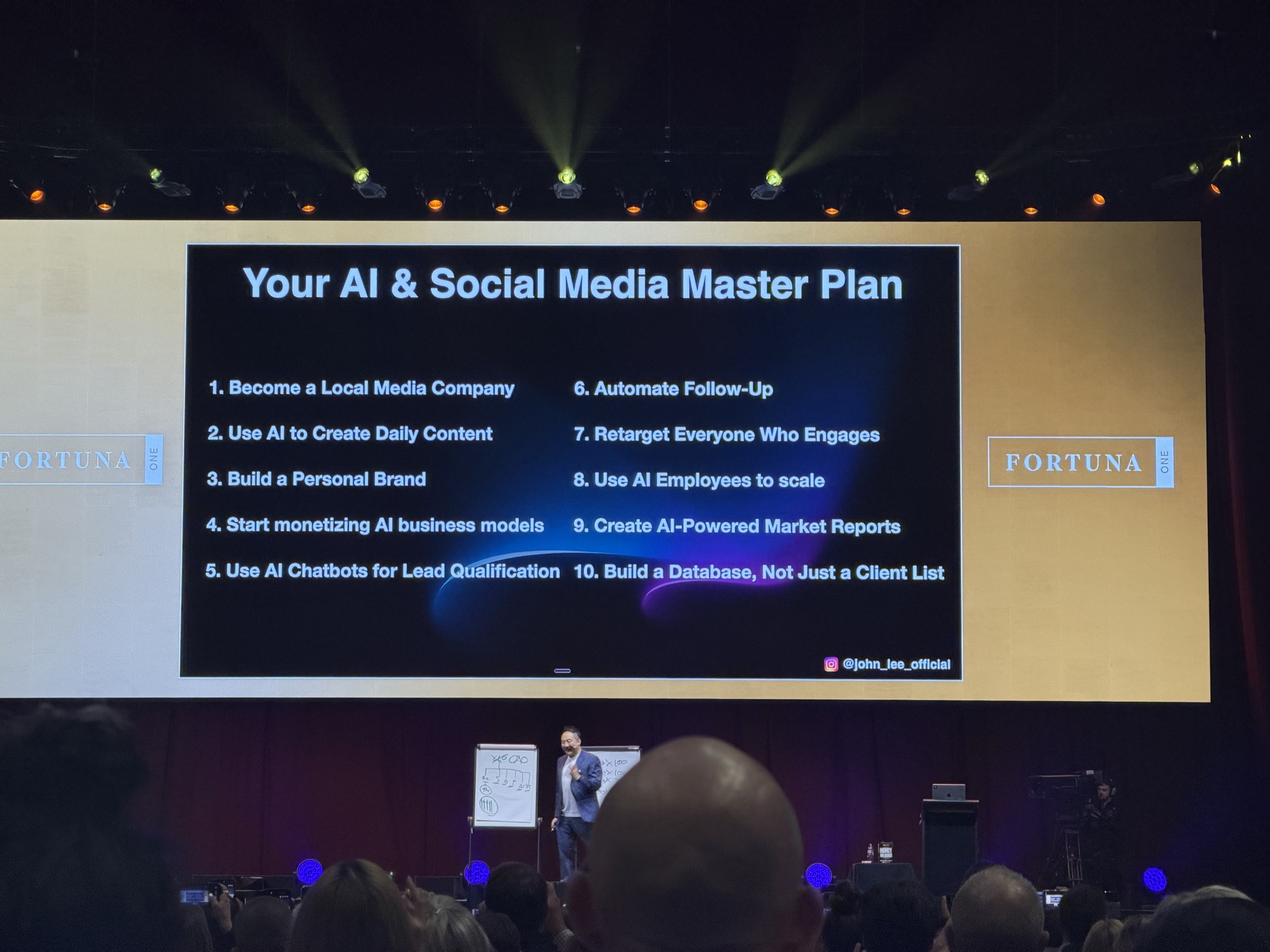
John also played examples of AI-generated presenters and commercial content. These clips make his point about speed and creative range more clearly than a description of them would, while also showing why the person publishing the work still needs to decide whether it is credible, appropriate for the brand and honest about how it was made.
Steven Bartlett was the second headliner, and his interview covered experimentation, AI, success, relationships and the decisions that become expensive when a leader avoids them. What sat well with me was that he did not give the room a fixed answer and pretend it would keep working. His companies measure how often people test an idea because the employee can control whether the test happens, but not whether the market agrees with the hypothesis. He said they have a head of failure and that teams report their experiments every week and month. Even the barista at his office ran a small test comparing flat white and matcha sales, which made his point much better than another management slogan would have.
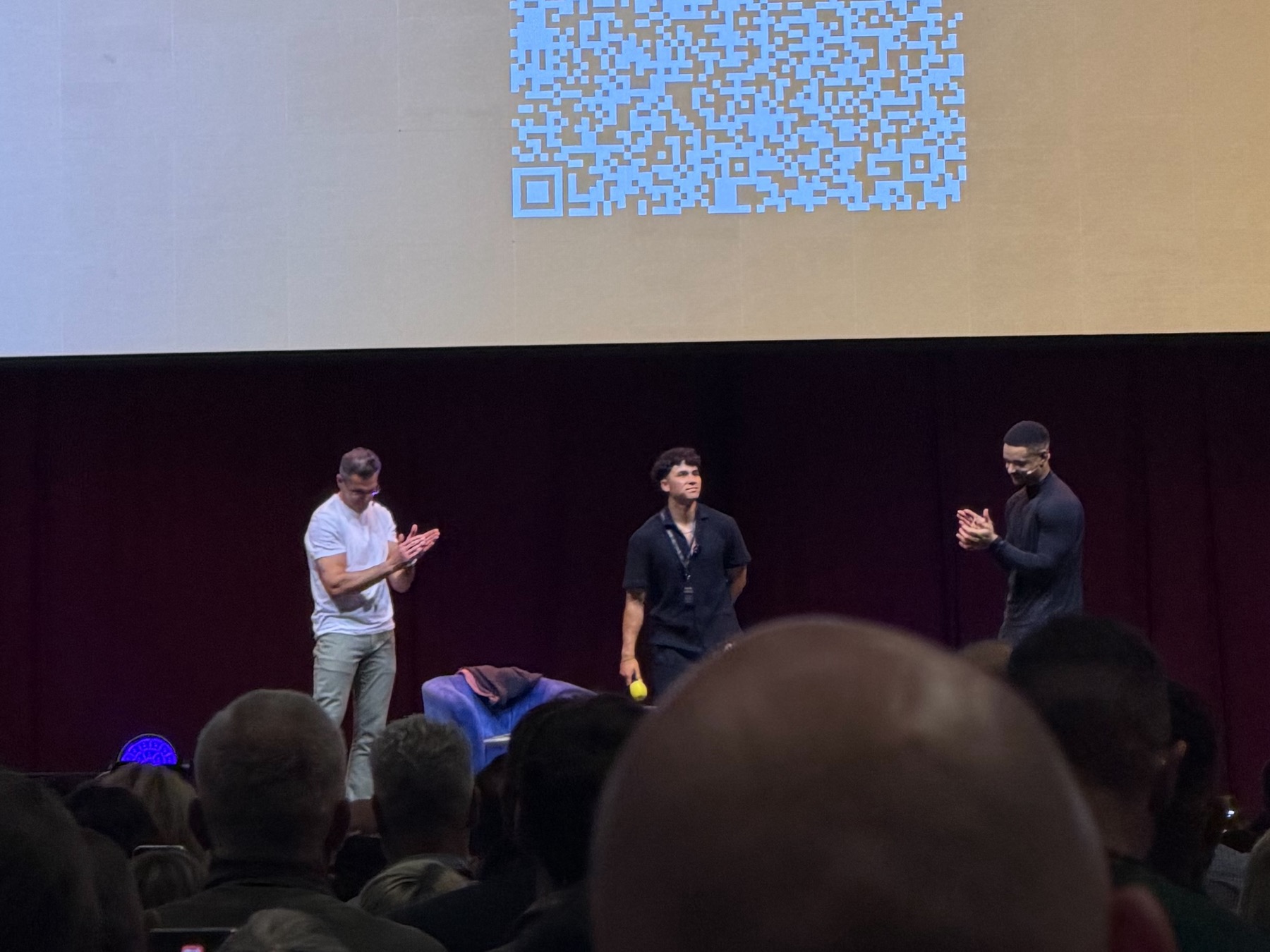
He also gave a result from his own podcast. A ten second change to the call to action increased subscriptions by 178% at the last check, while many other tests failed. I took that as an argument for running smaller tests against real customers, keeping a record of what changed and measuring the result. It is directly relevant to AI because businesses are being shown finished demonstrations and asked to commit to large projects before they have tested the workflow, the data or whether anybody wants the output. I would rather put a narrow version into use, watch where it fails and decide what to build next with evidence from the business.
When he was asked about AI, he did not try to predict exactly what the technology would do in five years. He used Amazon’s continued investment in faster delivery and lower prices to explain why a business can invest in needs that are unlikely to disappear, even when the technology is hard to forecast. His own bet was that people will continue to want connection, meaning, competition and shared experience. An AI system may be able to drive a Formula 1 car faster than a person, but people follow the drivers, pressure, rivalries and mistakes. Removing the person removes the reason most of the audience is watching.
Bartlett described a company expecting to reduce customer service numbers through attrition and put some of the saving into better human service for larger clients. I agree with the direction, provided the business does not use AI as an excuse to make every customer fight a machine before reaching somebody who can help. The repetitive work can move to software, while people handle the conversations where judgement, trust or a relationship changes the outcome.
He was also direct about what his own version of success costs. He expected to spend about 25 of the next 30 days on planes and said he had worked almost seven days a week since he was 18. Jack, who had worked behind the scenes on the podcast for about eight years, thought Bartlett was happy but still did not want his life. I thought that was one of the better moments in the interview because the audience could admire the result without being told to copy the life that produced it.
The other point that stayed with me had nothing to do with software. Bartlett said his best and most expensive decisions had both involved people, and that avoiding one difficult conversation in his business had cost him millions of dollars. He spoke about listening long enough to understand what actually motivates someone rather than forcing a prepared question or sales line into the conversation. AI can prepare the account history or show patterns across previous discussions, but it cannot take responsibility for the conversation a leader keeps avoiding.
Tony Robbins was the headliner and spoke for more than three hours. He covered state, influence, customer choice, offers, founder dependence and AI, with most of the room on its feet for large parts of the session. His delivery is bigger than anyone else’s on the program, but the business argument underneath it was practical. Complicated ideas get weaker as they pass through a company. A useful idea has to be simple enough for the team to understand and repeat without the founder standing beside them.
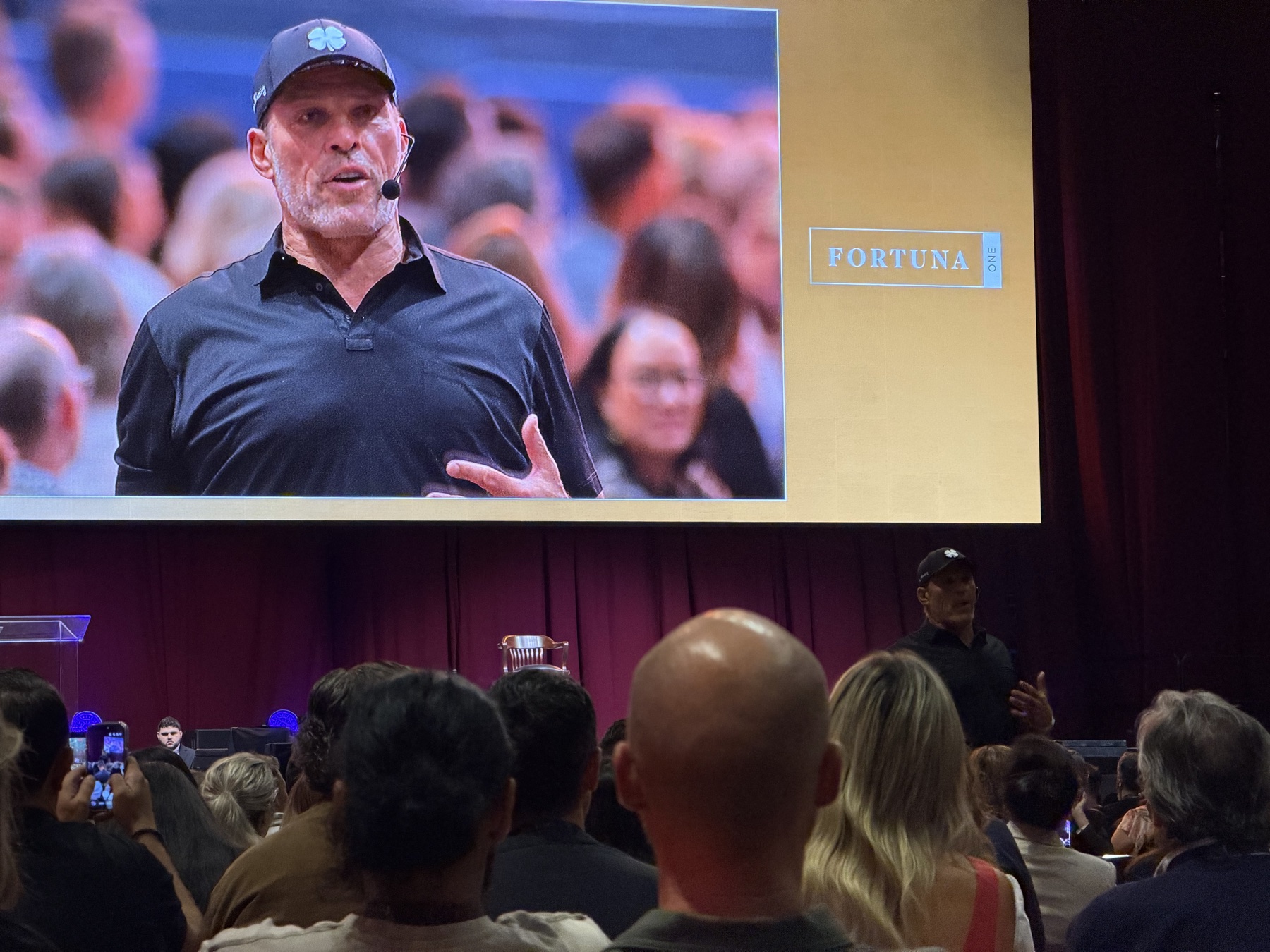
His discussion of patterns fitted the AI sessions better than I expected. He separated recognising a pattern, applying a pattern that already works and creating a new one. Most businesses do not need to invent a new category of AI. They can start with a process they already understand, such as preparing a quote, checking a purchase order or bringing the history of a customer account into one place, then use AI inside that process and learn from what happens. The creative work comes later, after the business understands the inputs, decisions and exceptions well enough to change the pattern safely.
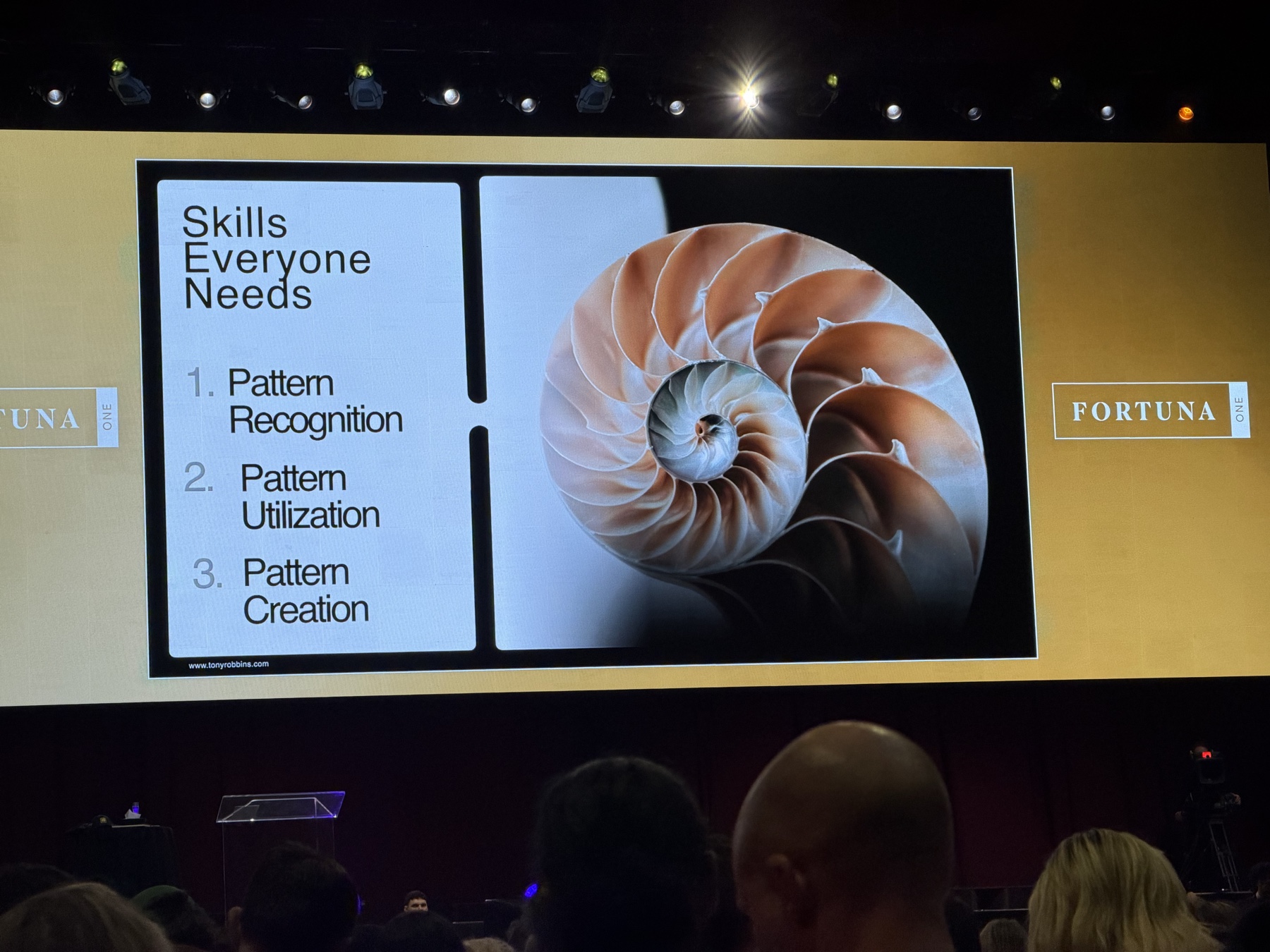
He said the next 36 months would bring enormous change and that people would be replaced by people who knew how to use AI. I agreed with his push to build capability rather than wait for certainty. I did not take his dates for AGI or superintelligence as settled facts, and his story about work that once took three years and $3 million being completed in less than a week needed more detail before anybody could use it as a business case. The useful detail was that he did not accept the first output. He said he iterated the agents’ work about 15 times, which sounds much closer to how good AI work is actually produced.
His distinction between an operator and an owner also belonged in this article. If the founder cannot leave for a week without the company slipping, the business still depends on that person regardless of how many automations it runs. Tony’s advice to know the ideal customer, build an offer that removes the reasons not to buy and then exceed what was promised also gave the AI discussion a customer test. Faster production is useful when it helps the right customer make a decision or receive better service. Producing more of the wrong thing faster is still the wrong thing.
A purchase order shows what this looks like in practice. It arrives as an email attachment, somebody reads it, copies the supplier, reference, quantities and amounts into another system, checks the total and sends the exceptions to finance. AI can read the document and prepare those fields, while the rest of the build handles the supplier match, checks the details against the order record, places exceptions in a queue and records the approval. Finance then spends less time rekeying information and receives the exceptions sooner.
For quote preparation, the system can collect the notes from the enquiry, find the approved service and pricing information, draft the scope and place the result in the CRM. The account manager confirms what is being promised and what it will cost to deliver. Meeting follow up can move beyond a generic summary, with decisions, owners, due dates and unresolved questions written into the project system after review, instead of being left in a transcript that nobody opens again.
Established businesses have years of proposals, questions, corrections and customer conversations that a new software company does not have. That material can shorten the work involved in preparing a response or finding the right precedent, provided the source is current and the system shows where the answer came from. Steven Bartlett spoke about running more experiments, and that means putting each test into a process or in front of a customer. A polished demo that sits beside the existing process has not tested much at all.
As soon as an AI system can read SharePoint, email, the CRM or accounting software, it needs its own identity and only the permissions required for that workflow. It should not inherit broad access from the employee who built the first version. Actions that move money, make a commitment to a customer, alter a sensitive record or delete information should stop for approval, and the logs need to show the source material, the output, the approval and what was eventually sent or changed.
A paid business subscription does not settle the security questions. I still want to know whether prompts and files are retained, whether they are used for training, where the data is processed, which other providers are involved, how administrators gain access and what can be exported when the business leaves. I also want a defined path for exceptions, because the unusual invoice, customer or contract is often where an automated process causes damage.
The same care applies to recording meetings. People need to know the conversation is being recorded, the recording needs a legitimate purpose, and the storage and retention settings need to suit the information being discussed. A public conference session is different from a client meeting containing health information, legal advice, employee matters or commercially sensitive plans. I use Plaud regularly, but I do not treat every conversation as material that should be sent to a transcription service.
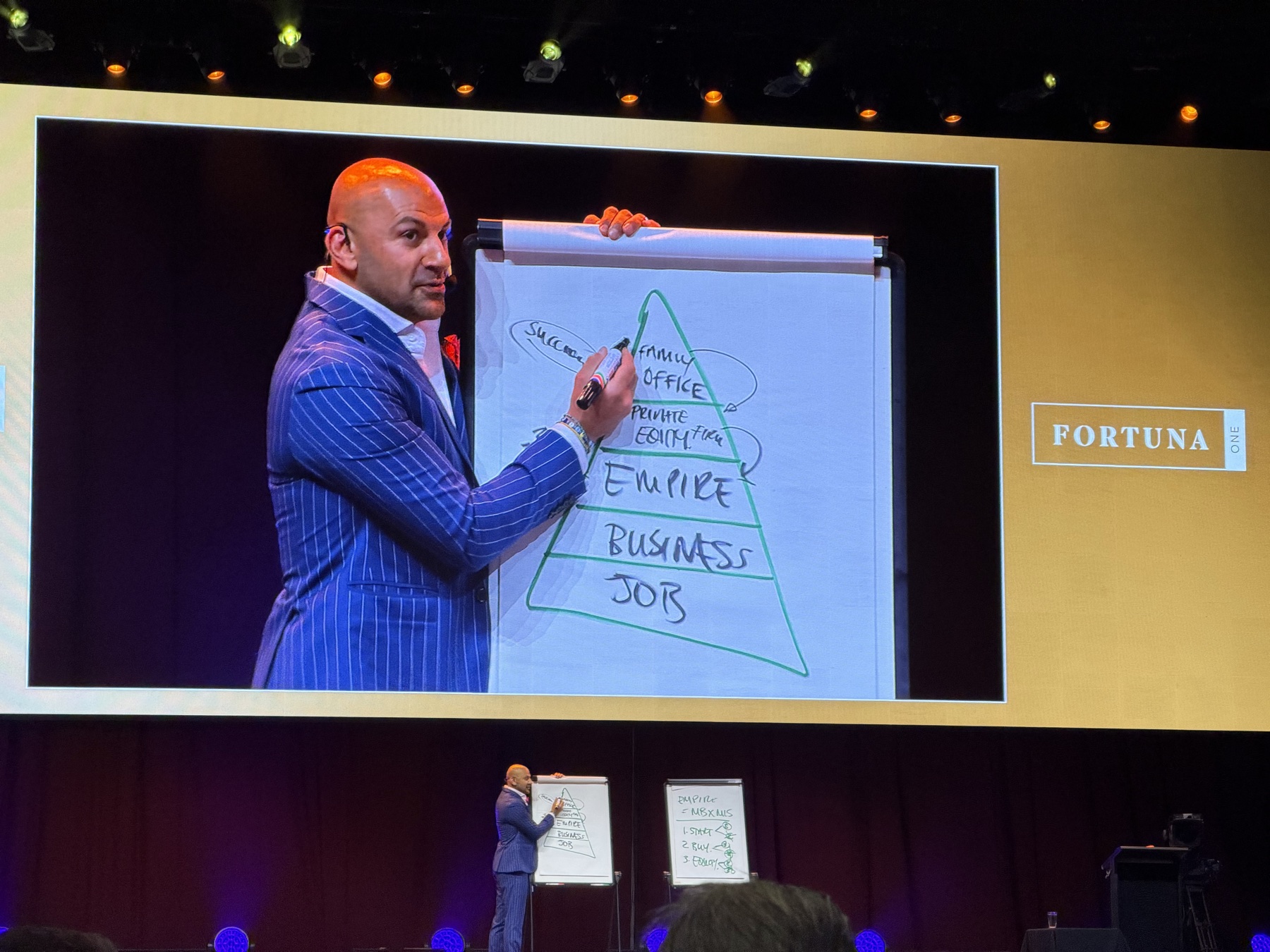
Aaron Sansoni’s growth pyramid dealt with the move from self employment into a business that can operate without every decision returning to the founder. Tony Robbins and the Freedom Operating System session covered similar ground from different angles, with more attention on the owner, leadership and the life being built around the company. A buyer can place more value on a company when the way it sells, delivers, bills and retains customers can be understood and transferred.
AI can help document that knowledge, make it searchable and support the team while work is being completed. It can also hide the same dependence inside a collection of prompts, subscriptions and automations that only the founder understands. I have seen enough undocumented technology to know that replacing an owner bottleneck with a technical bottleneck does not make the business more independent. The workflow, decision rights, credentials, data sources, review points and failure process all need to be available to the business rather than living in somebody’s account or memory.
The acquisition opportunity discussed at Fortuna One centred on profitable Australian businesses with retiring owners, loyal customers and weak internal systems. Better use of software and AI may improve their margins and make them easier to operate, although I would begin with the customers, revenue, contracts, staff, data and underlying process because better software does not correct a weak purchase.
Shelly Sullivan and Kelly Iversen spoke about the communities built around MK Beauty and Sweat, and the speed that comes from hearing customers directly. AI can group feedback, find repeated objections, bring the history of an account into view and prepare a response for the team. It can also fill every channel with automated messages that are accurate, prompt and forgettable. The business has to decide what it wants to say, which promise it is prepared to make and when the customer needs a conversation rather than another sequence.
Producing more content and leads does not mean the market wants more, and lower production cost does not excuse weak judgement. I look at whether the work brings a qualified enquiry, shortens a sale, answers a customer question or gives the team information they can use. Views and output volume help explain what happened, but they are not a commercial result.
Tony Robbins spoke about recognising patterns, while Bartlett spoke about repeated experimentation and human needs that do not change at the pace of the technology. AI finds patterns across a large body of material, while the business decides whether a pattern is commercially relevant and how acting on it will affect the customer.
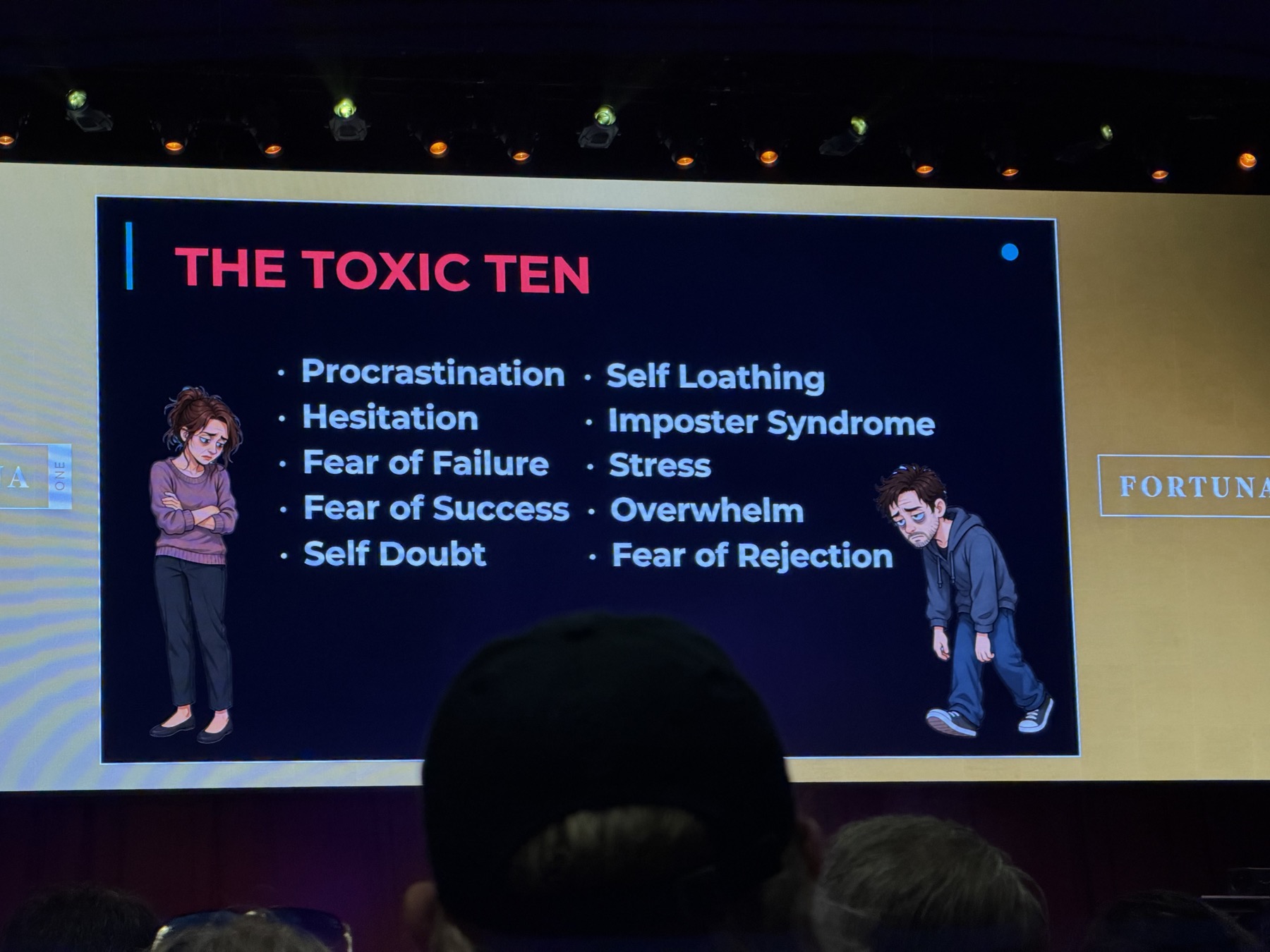
Paul’s “Toxic Ten” slide named procrastination, hesitation, fear of failure, fear of success, self-doubt, self-loathing, imposter syndrome, stress, overwhelm and fear of rejection. His broader point was that being in the room and writing notes was not enough. He wanted people to turn the notes into actions with a reason and a date, explain what they had learned to somebody else and notice the habits that stopped them doing any of it. That applies just as much to AI adoption because buying software and sending the team a training link rarely changes how the work gets done. The team has to use it on live work, correct it, understand when it fails and repeat the process until it becomes normal.
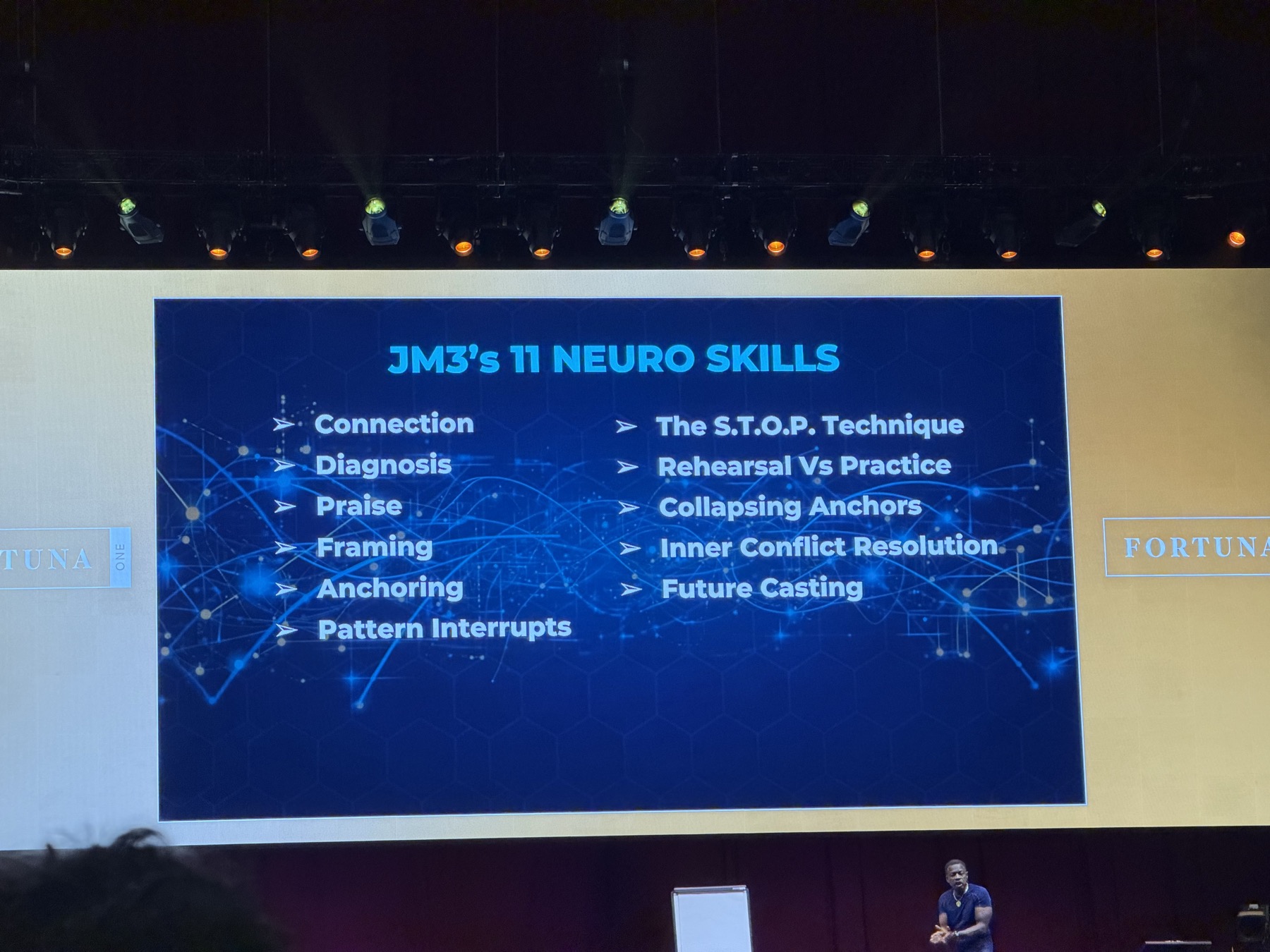
Joseph McClendon III was also speaking about participation, repetition and behaviour rather than AI, although the same lesson carries into a business introducing a new way of working. Gary Brecka’s session dealt with health and nutrient deficiencies, and I have left his medical claims out because they need to be checked against qualified clinical advice rather than repeated in a business article.
The device below is my Plaud Note Pro in its case, photographed from my seat at Fortuna One. I use it for in person meetings, workshops and phone calls on speaker because I can stay in the conversation instead of trying to write a partial record while somebody is talking. After the meeting, I review the transcript and add the decisions and assigned actions to the project system or CRM.

I used a separate recording for each session where practical, then let Plaud create the transcript and the first summary. I checked the speaker names, dates and technical language that the transcription had guessed, and I kept claims attributed to the speaker until I could verify them elsewhere. A summary can make a confident stage claim look like an established fact when the source was an opinion, a case study or part of an offer.
My use of Plaud changes with the conversation. A normal business meeting needs the decisions, who accepted responsibility, the dates, unresolved questions and risks. A sales call needs a reliable record of what the customer asked for, the objections, agreed follow up and any promise that was made. A workshop needs the project decisions, assumptions, dependencies and work that has no owner. I ask for those outputs directly because the summary is wasted if the decisions never reach the system where the team works.
These are the 12 Plaud summaries behind this article. Eleven are the PDF exports from the folder I used for this page. The Freedom Operating System summary remains available as Markdown because its PDF was not present in the export folder. I have left the content as Plaud produced it, apart from giving the files shorter names, so you can see the source material I worked from and form your own view.
Event welcome
Active participation
Download PDF summary ↓
PS
Paul Siderovski
Learning and economic opportunities
Download PDF summary ↓
 Joseph McClendon III
Turning knowledge into action
Download PDF summary ↓
SK
Shelly Sullivan and Kelly Iversen
Community, growth and founder independence
Download PDF summary ↓
Joseph McClendon III
Turning knowledge into action
Download PDF summary ↓
SK
Shelly Sullivan and Kelly Iversen
Community, growth and founder independence
Download PDF summary ↓
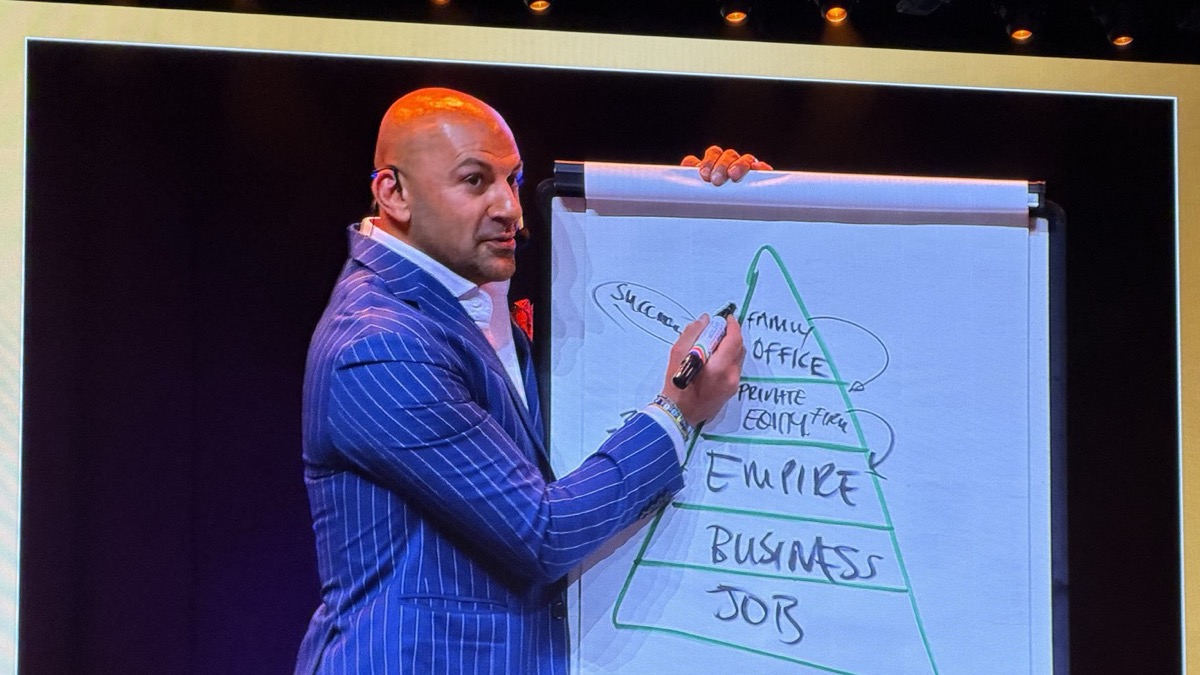 Aaron Sansoni
Empire building and business acquisitions
Download PDF summary ↓
NK
Natalie Kucior
AI adoption in enterprises
Download PDF summary ↓
John Lee
AI monetization and automated sales
Download PDF summary ↓
Steven Bartlett
Experiments, relationships and human value
Download PDF summary ↓
Aaron Sansoni
Empire building and business acquisitions
Download PDF summary ↓
NK
Natalie Kucior
AI adoption in enterprises
Download PDF summary ↓
John Lee
AI monetization and automated sales
Download PDF summary ↓
Steven Bartlett
Experiments, relationships and human value
Download PDF summary ↓
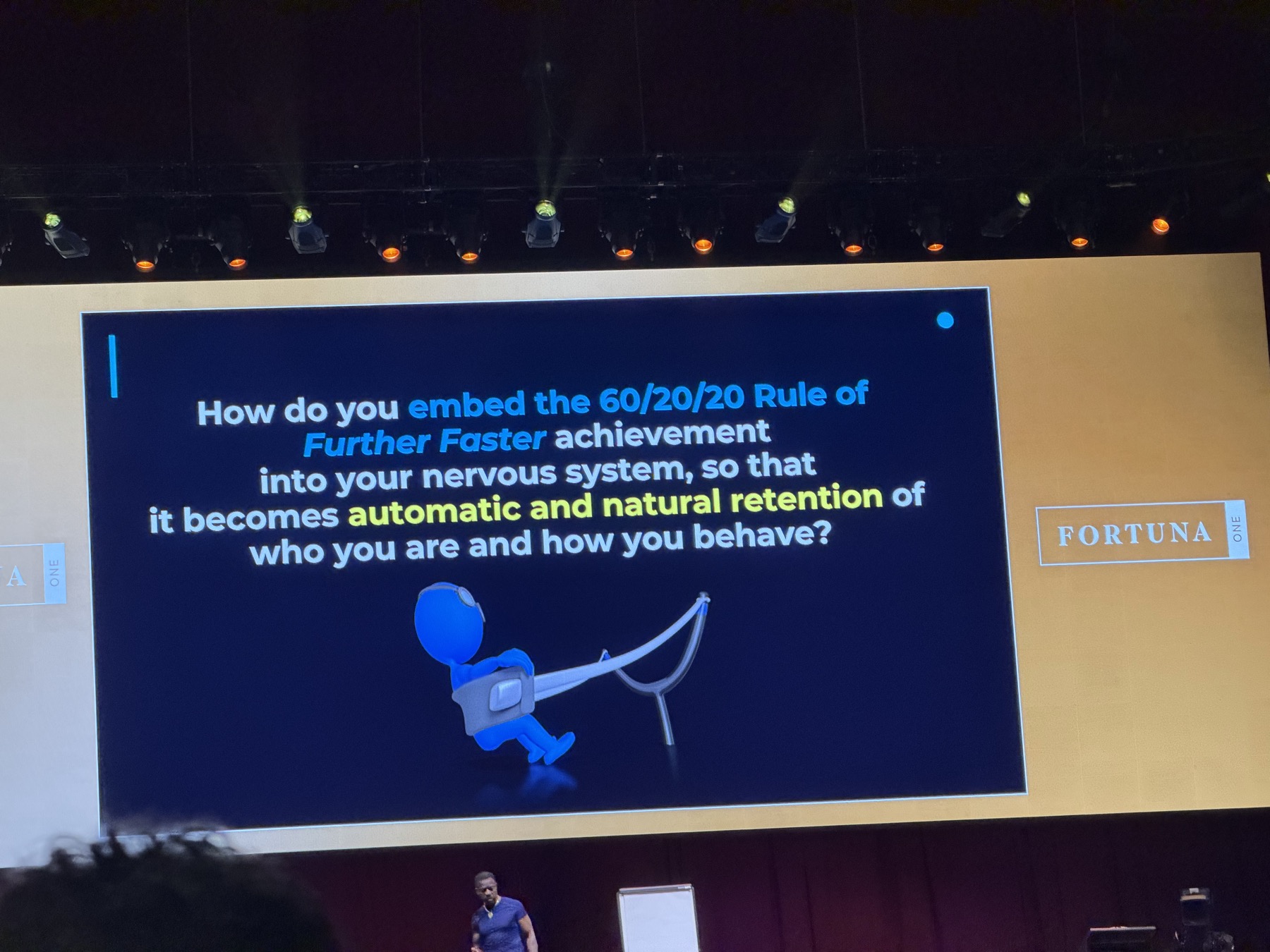 Joseph McClendon III
Magnetism, neurocoding and the 20/20 rule
Download PDF summary ↓
Joseph McClendon III
Magnetism, neurocoding and the 20/20 rule
Download PDF summary ↓
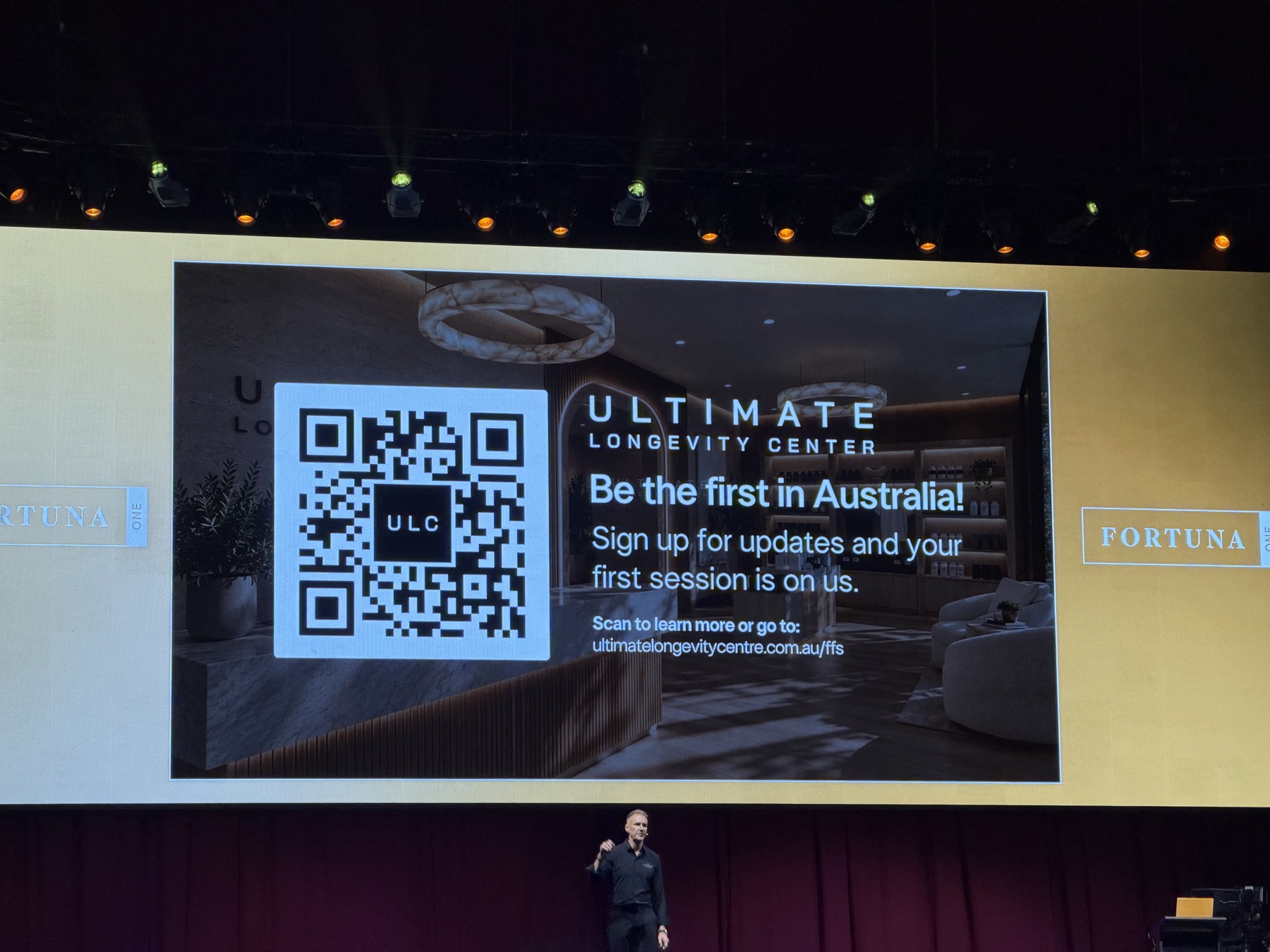 Gary Brecka
Nutrient deficiencies, genetics and longevity
Download PDF summary ↓
Gary Brecka
Nutrient deficiencies, genetics and longevity
Download PDF summary ↓
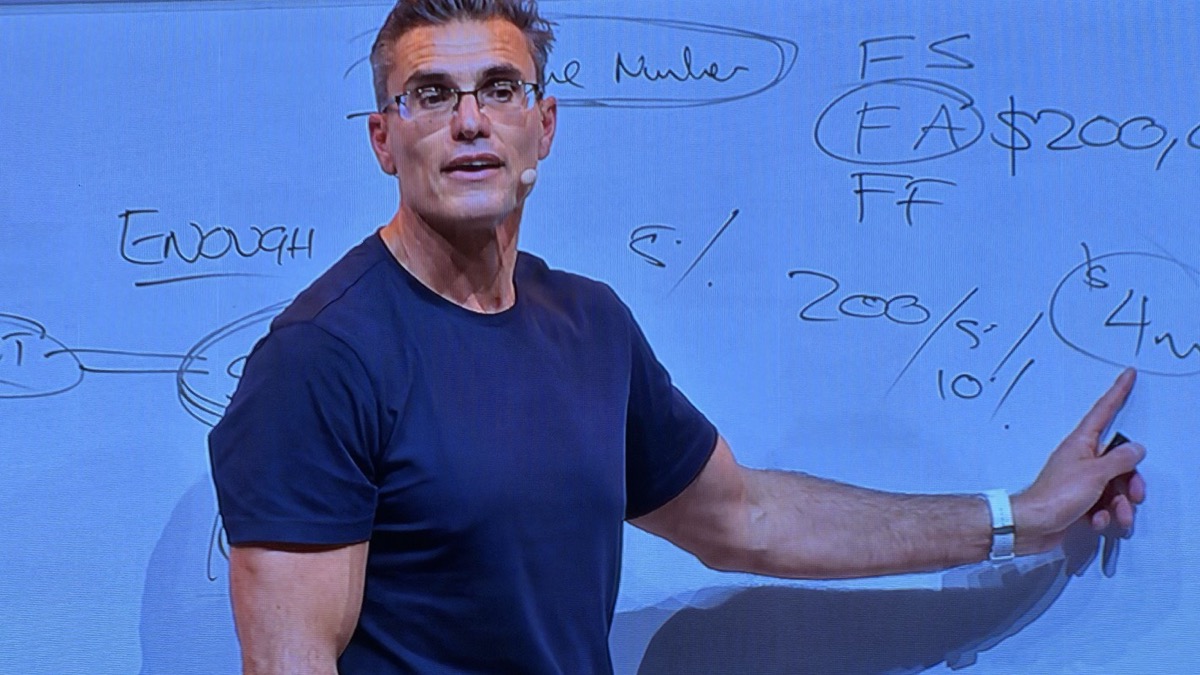 Freedom Operating System
From achievement to fulfilment
Download PDF summary ↓
Tony Robbins
State, influence, business growth and AI
Download PDF summary ↓
Freedom Operating System
From achievement to fulfilment
Download PDF summary ↓
Tony Robbins
State, influence, business growth and AI
Download PDF summary ↓Plaud recorded each session, produced the transcript and created the individual session summary. I then gave the full set of summaries to ChatGPT and asked it to compare the event as a whole, including claims repeated by unrelated speakers, points where they disagreed, useful lessons for business owners and the security questions that had received little stage time. I kept the source connected to the claims so I could return to the transcript when a statement needed its context checked.
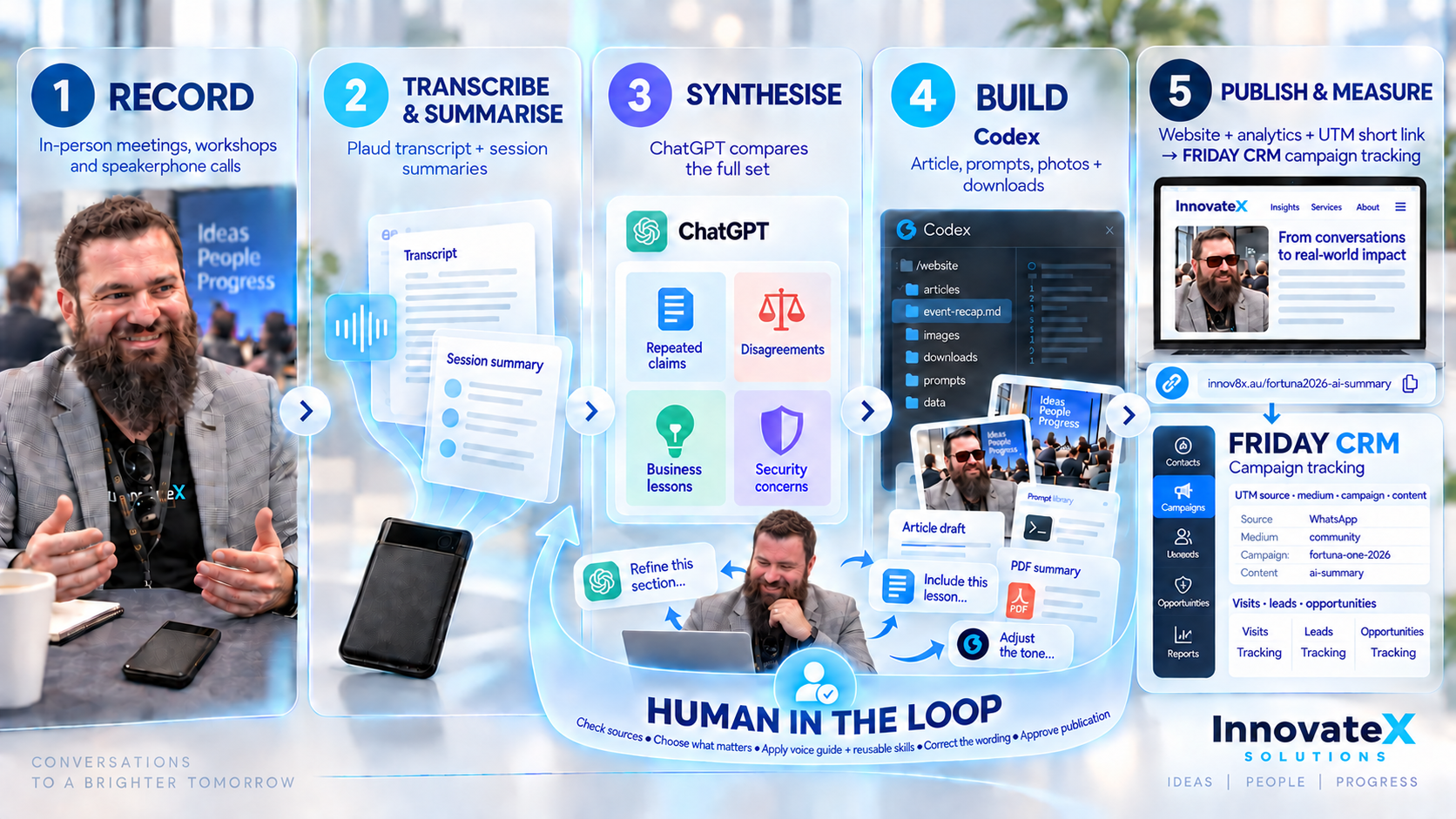
Codex worked inside the InnovateX website repository. It read the existing Insights pages and site styles, added the event photos and PDF downloads, and put the article into the same build as the rest of the website. The prompts and summaries remain beside the page instead of being copied between an AI chat, a document and the website by hand, and I can see the result on the local site while I am editing it.
I am the human in that loop. ChatGPT can compare the summaries and Codex can help write and build the page, but I choose which lessons matter, check the claims against the recordings and decide what I agree with. I worked through the drafts with Codex until the wording sounded like something I would say, using the voice guide I had already provided and a reusable writing skill that removes the patterns I do not want. The tools helped with the volume of material, the writing and the website work; they did not decide my view of the event.
The short link I share is innov8x.au/fortuna2026-ai-summary. It sends the reader to this page with the campaign, source and content values attached, which lets Google Analytics and PostHog separate visits from the WhatsApp channel, LinkedIn and the rest of the site rather than reporting every reader as the same traffic. That link also sits inside FRIDAY, my own CRM, against the Fortuna One campaign so I can follow visits, leads and any opportunities back to what I shared.
I use the same process after meetings and workshops. Plaud gives me the record and first summary, ChatGPT helps compare it with the other material, and Codex puts the result into the files and systems where I need to use it. I still check the transcript, decide what is correct and take responsibility for what is published or added to a customer record.
During Fortuna One I shared material in a WhatsApp channel with several hundred people, giving the group context while the sessions were taking place and a way to catch points they had missed. This page keeps those notes available after the event, adds the security and implementation detail I would give a client, and documents how I recorded, checked and published the material.
I have made the page free, and there are two Fortuna One offers for anyone who wants to work through the same questions in their own business.
ONLINE · ACROSS AUSTRALIA
Ongoing lessons across AI, cyber security and technology, with a Fortuna One price for Premium membership.
See the Academy offerIN PERSON · BRISBANE
A day in Brisbane working through where AI fits in your business, what to build and how to manage the data and security around it.
See the Brisbane workshopAfter Fortuna One
Join the Academy online, or bring a real process to the AI for Business Owners workshop in Brisbane.