What I Took from Open Summit AI in Brisbane
Todd Johnson reflects on the practical business examples at Open Summit AI Brisbane, from loan applications to company knowledge, with further questions about IP and secure AI use.

Todd Johnson
Founder, InnovateX Solutions
Published · 4 minute read
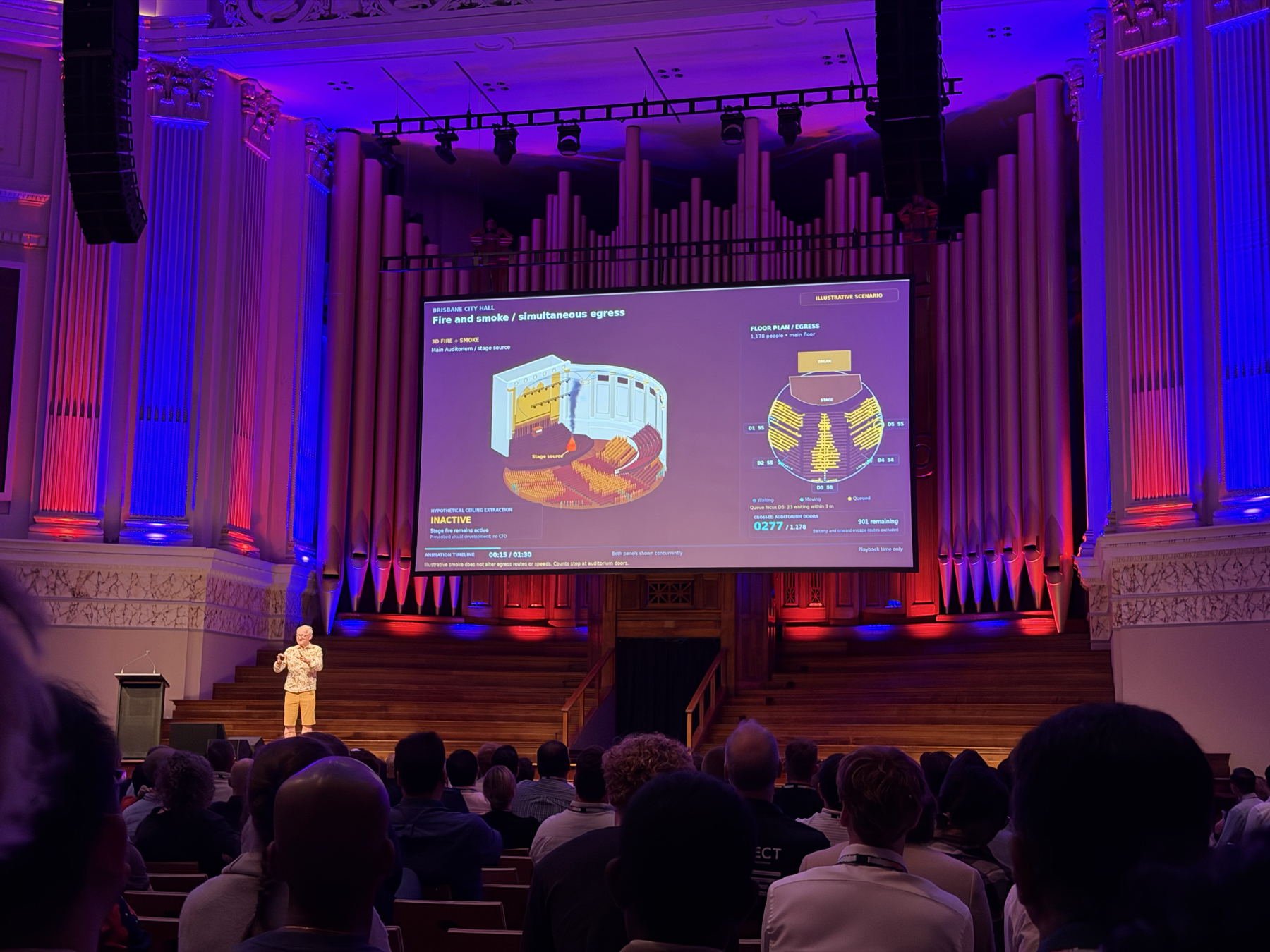
Open Summit AI, Brisbane City Hall, 11 November 2026. Photo from the event.
I went to Open Summit AI at Brisbane City Hall on 11 November. The most useful sessions explained what people had changed in their businesses and how they’d decided where AI belonged.
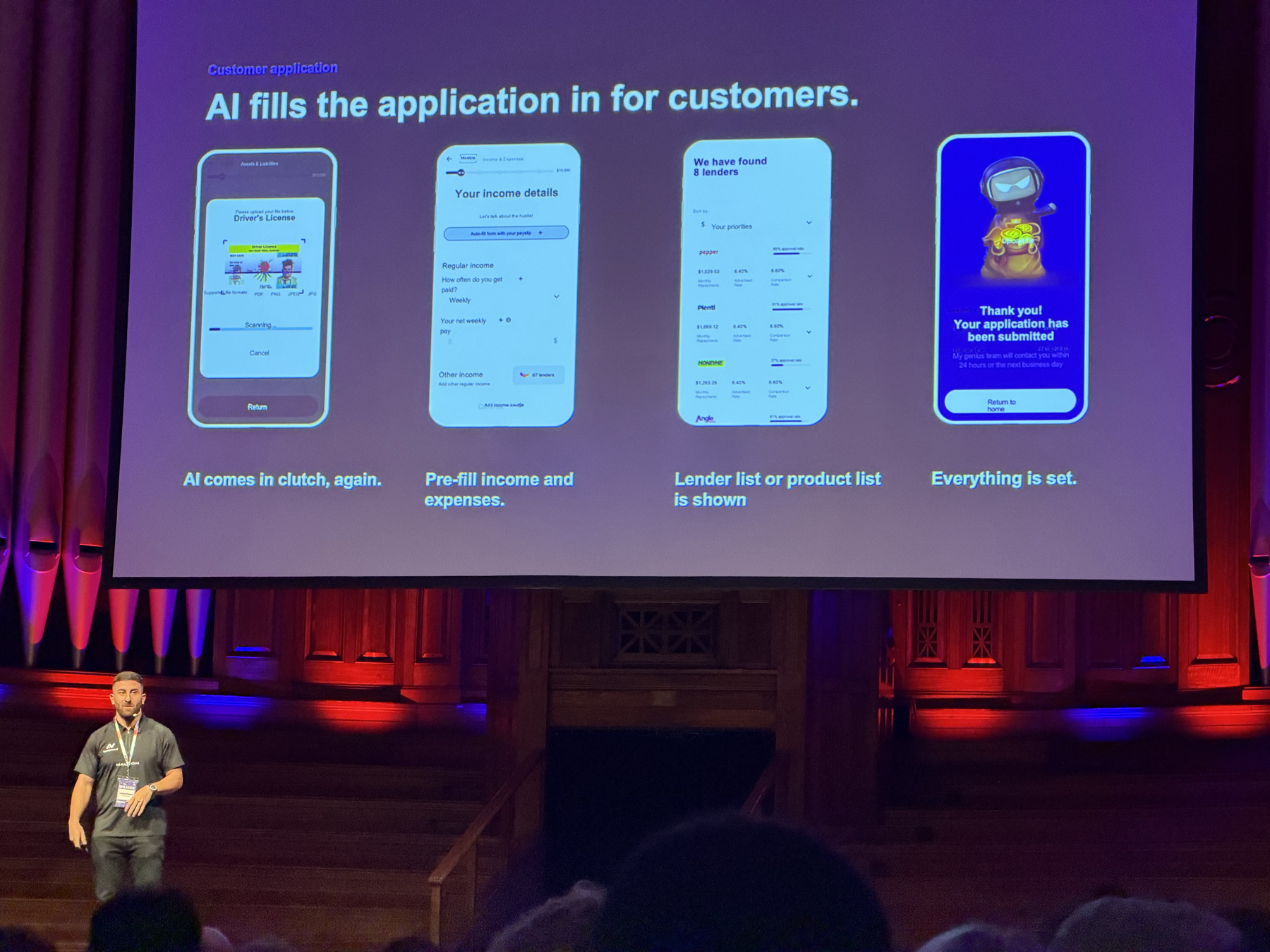
Julian Fayad’s LoanOptions AI example stood out. His team changed the application process so customers could provide documents early and have their information extracted. That reduced the amount they had to type before being asked to prove it.
Anyone who’s filled out a long application and then supplied documents containing the same information can appreciate that improvement.
He also spoke about testing customer behaviour. In one experiment, he said an AI-assisted follow-up process doubled the rate at which customers supplied their supporting documents. They tested a specific change against their existing process and looked at what customers did.
His account of building the business was worth hearing too. He described starting with an Excel proof of concept, reinvesting revenue and being selective about where development effort went. The decisions about what to build had commercial consequences.
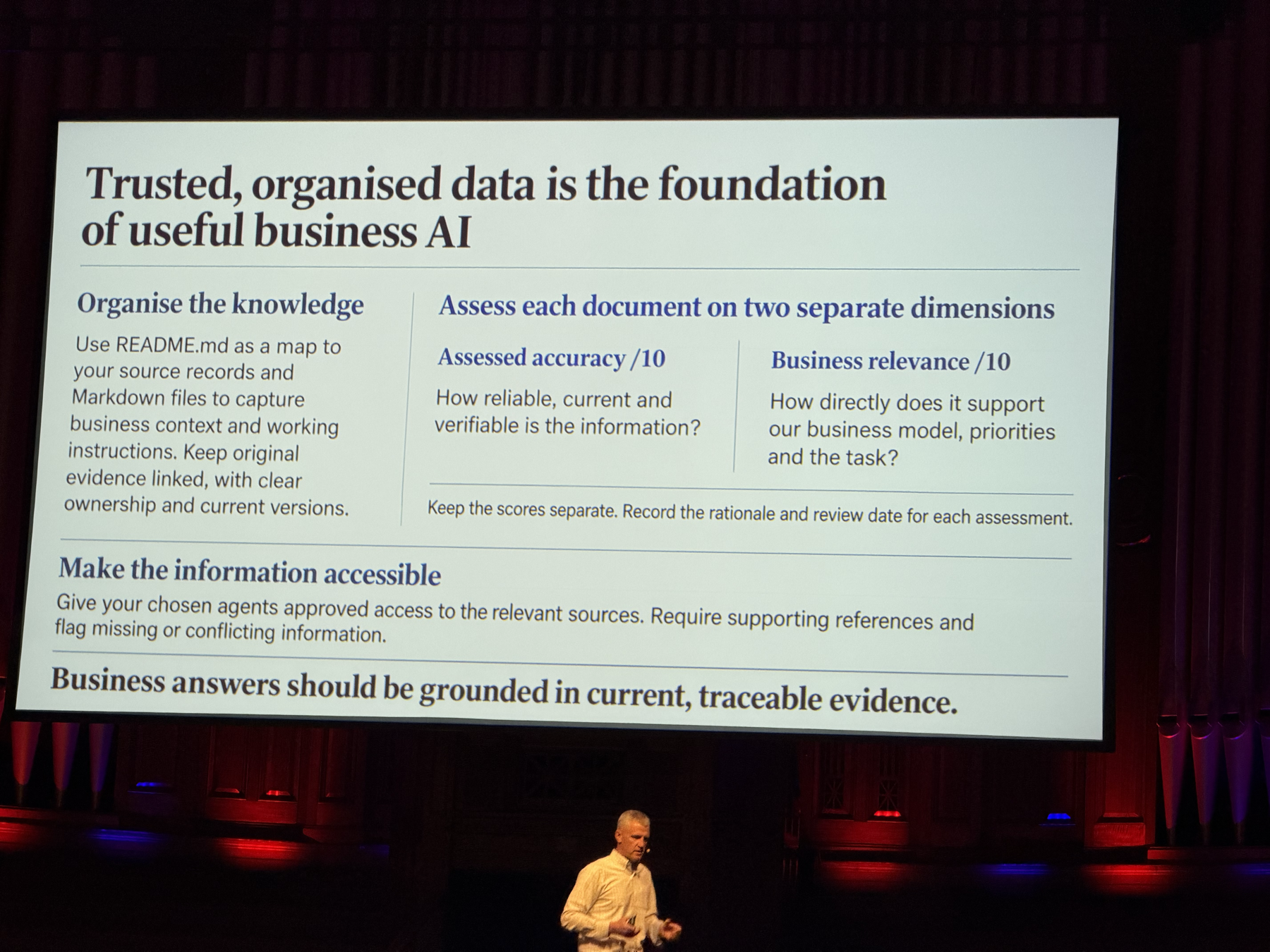
Clayton Cross’s session connected with another part of this for me. He explained how he gives agents selected geological references alongside regional knowledge and the company’s own records. Recommendations then go back to a geologist.
His slides went into organising that information, keeping original evidence linked and assessing accuracy separately from business relevance. He also covered the operating layer around the AI, including how context connects to the tools and workflows.
That’s directly relevant to a business thinking about where to start. You already have knowledge about your field and how your business operates. Making that available to AI takes some work, particularly when it’s spread across documents and people.
I liked the distinction between accurate information and relevant information. A reference can be reliable and still have little bearing on the decision in front of you. Someone with experience in the field can recognise when an answer misses a detail that changes the outcome.
Jack Bear added a commercial perspective with his session on AI search. He showed how detailed product information could help AI systems understand what a business offers.
It raises a useful question for business owners. If a customer asks an AI to compare providers, have you made enough specific information available for it to assess yours? Explaining what you do, who it suits and the evidence behind it deserves attention alongside the appearance of the website.
The panel also gave time to the people affected by these systems. Privacy and supervision came up, along with a harder question about how younger people develop expertise when AI takes on some of the work they would have learnt through. There wasn’t a neat answer to that, but it belongs in the discussion.
Toby Walsh’s closing session captured both the possibilities and the limits. He showed an AI-generated evacuation simulation and acknowledged that he didn’t have the building engineering expertise to assess its accuracy.
The simulation showed how quickly he could produce something that would previously have required substantial coding. Assessing whether its assumptions were sound still required a building engineer.
The part I’d like to explore further is how businesses manage their own knowledge and IP as these systems become part of everyday operations.
A business develops methods and judgment over years. Some of that is valuable IP. Other information belongs to clients or carries restrictions on its use. Connecting it to AI means understanding who can access it and what goes to an external provider. It also means knowing how the knowledge stays with the business if the tools change.
The harness around the model has to support those choices. It manages the information and tools the agent uses, including when a person needs to approve an action. Clayton’s session provided a starting point for that conversation. I’d be interested in following it through with businesses that have been running these processes long enough to explain what they’ve learnt.
Julian’s advice to map the process and identify its bottlenecks gives an owner somewhere to start. Pick a process the team knows well, work out what needs improving and measure whether the change helps.
Written by Todd Johnson
Founder of InnovateX Solutions. Todd provides fractional CIO, CTO and Chief AI Officer leadership for Australian businesses and government, and wrote the XAF Connected Architecture framework.
Todd on LinkedIn